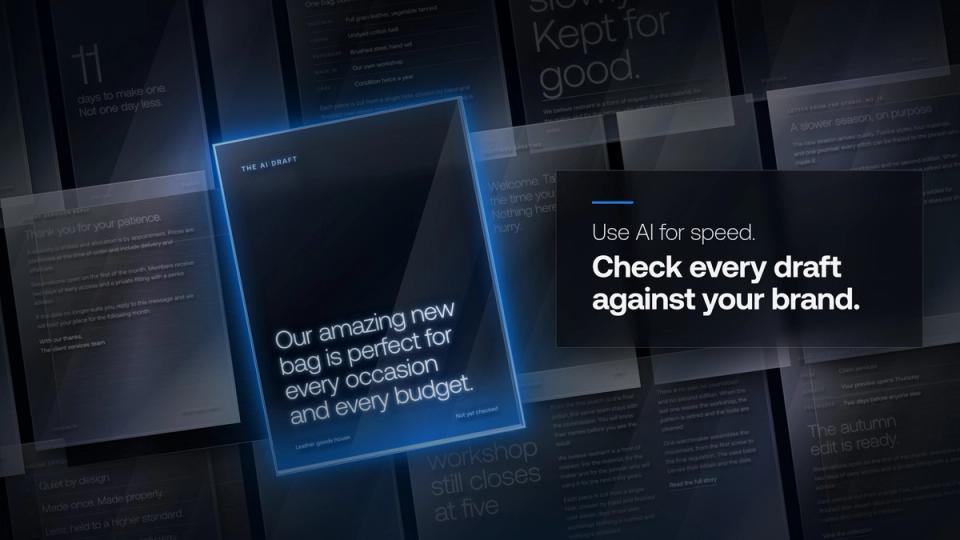
Your brand compliance software can spot the wrong shade of blue from across the room. Can it tell when AI just promised a customer something you don't offer? Here is what this software checks, the check most of it skips, and five questions to ask before you renew.
What is brand compliance, in plain words?
Brand compliance means everything that goes out under your name follows your rules. The right logo. The right colors. The right words.
Brand compliance software is what teams buy so they don't have to check every file by hand. It does that job well for what it was built to look at.
What brand compliance software checks
Marq, one vendor in this space, published a buyer's guide in 2026. It looks at features including template governance, approval workflows, role-based access control and audit trails. Many products in this category, and a lot of marketing compliance software, cover some mix of these:
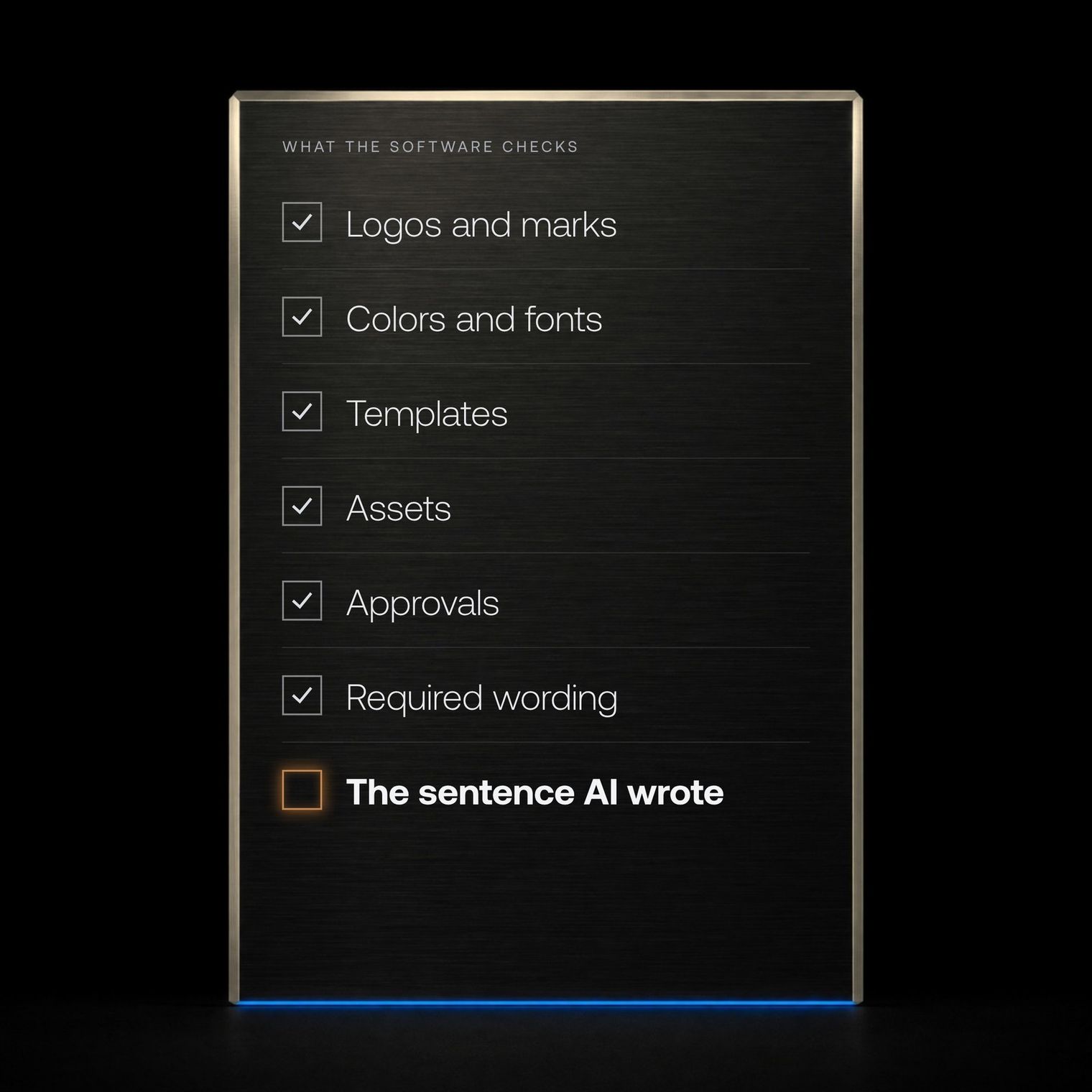
- Logos and marks. Right version, right size, enough empty margin around it.
- Colors and fonts. Your blue, not a neighbor of your blue.
- Templates. Locked layouts, so nobody stretches the logo "just this once."
- Assets. One library, so the old tagline stops coming back from the dead.
- Approvals. Who signed off, in what order, and when.
- Required wording. Disclaimers and legal lines that must appear.
That is a real list. If your team makes a lot of designed work, the software earns its keep.
What it misses: the sentence
Look at that list again. Nearly all of it is about how something looks or who approved it. Only the last item looks at words, and only at fixed wording.
That was fine when people wrote every sentence. A writer learned the voice, an editor caught the slips, and the volume stayed human.
Now AI writes product pages, emails, chat replies and social posts. The words are new every time. No template holds them.
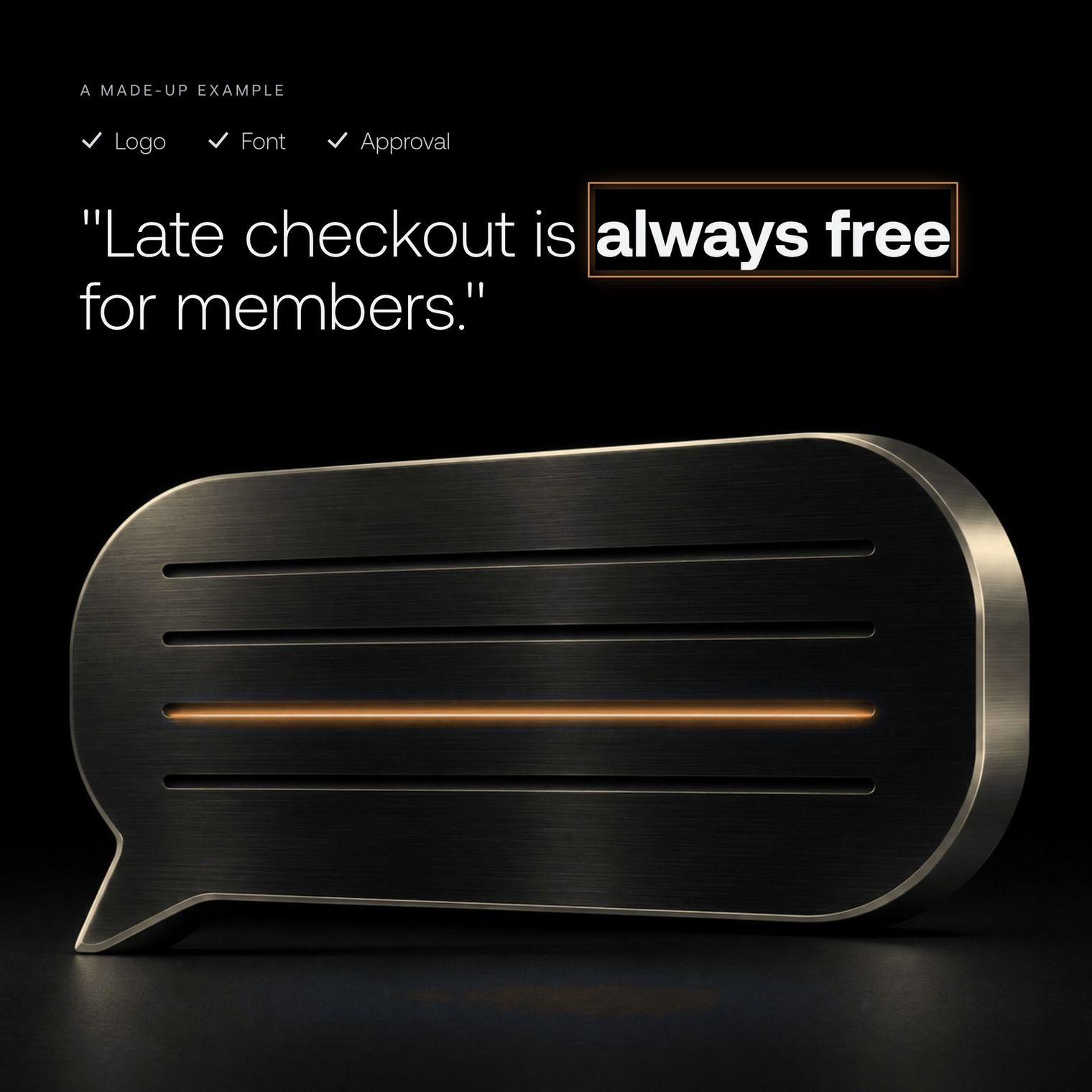
Here is a made-up example. A hotel group's AI assistant tells a guest: "Late checkout is always free for members." The logo on the chat window is perfect, and the font is right.
The approval workflow signed off on the chatbot six months ago. And the sentence is wrong, because late checkout was never free. The software checked everything except the part the customer read.
Your software checks the logo. Your customer reads the sentence.
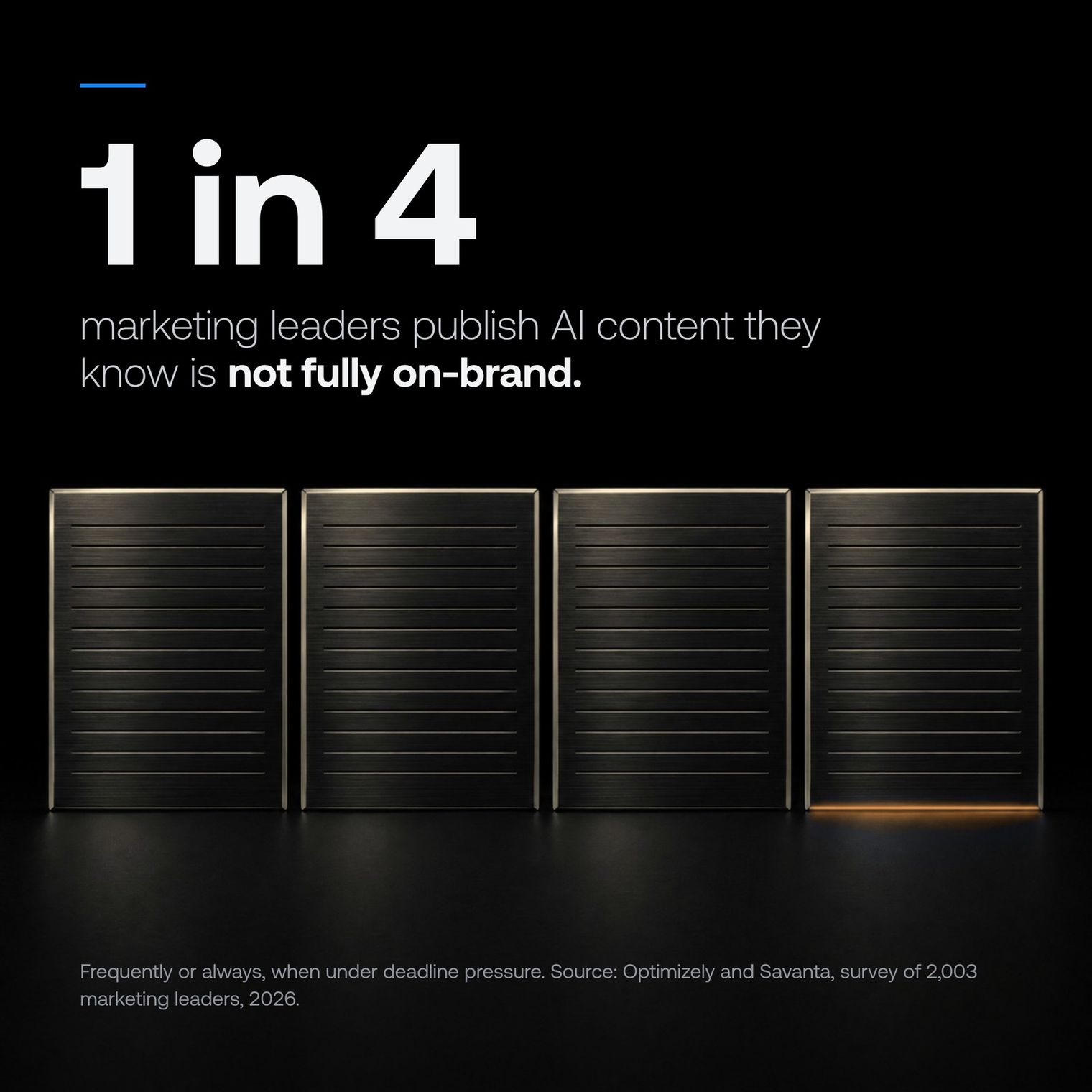
Marketers say this kind of content gets through. Optimizely, a marketing software company, had Savanta survey 2,003 marketing leaders in seven markets in May and June 2026. One in four said they frequently or always publish AI content they know is not fully on-brand under deadline pressure.
"But my software reads copy now"
Fair point, and some products do. The same Marq guide lists a product whose assistant reviews copy against brand guidelines. Adobe's documentation describes a brand check that includes a brand voice guideline and reports a brand compliance percentage. That is real progress.
So the question is where a check sits. As Adobe's page describes it, that check opens in a panel in the product's own canvas. A check built into one product reads what passes through that product. Chatbot replies, CRM emails and support answers are usually written in other systems.
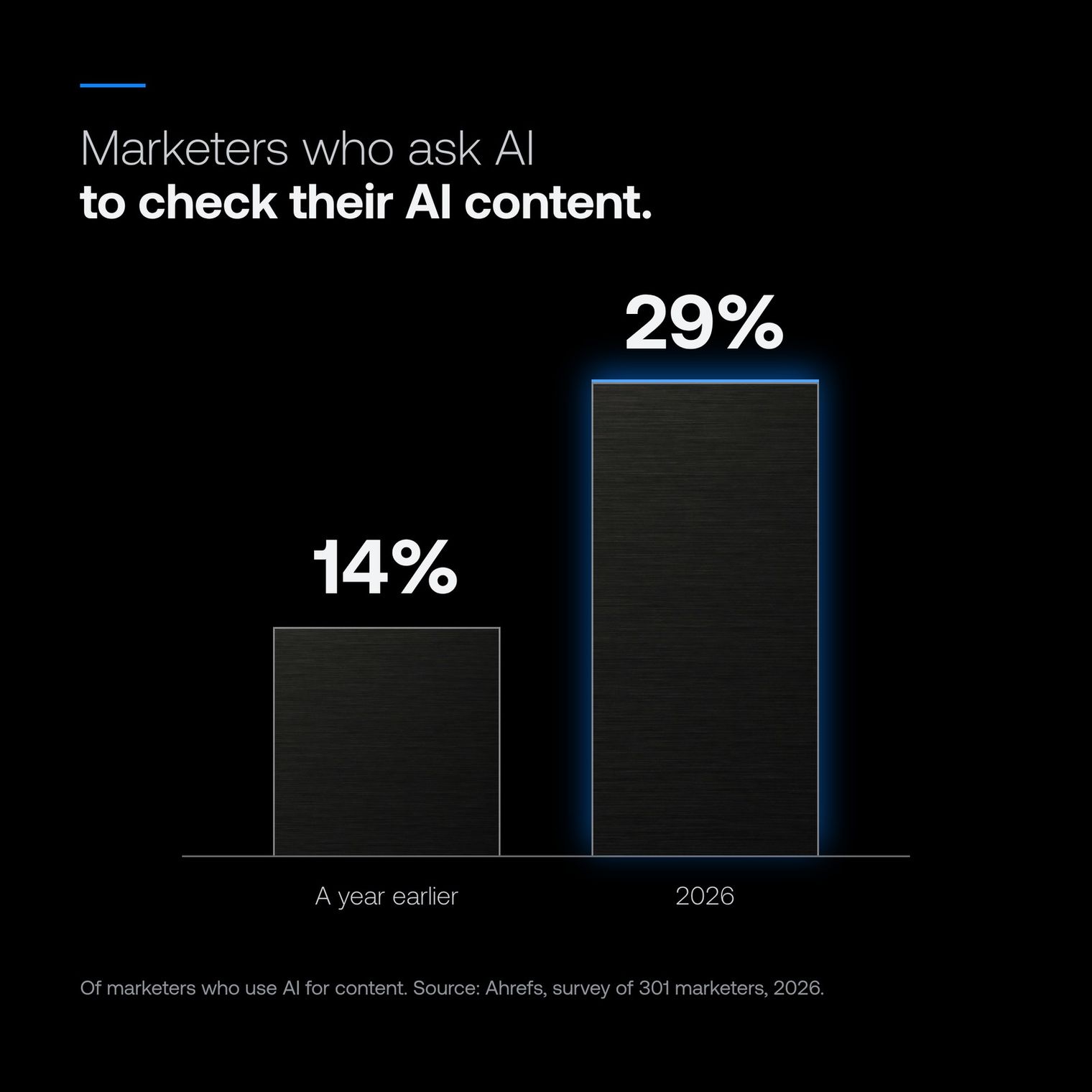
There is a second thing to ask, because more teams now ask AI to check AI. Ahrefs, an SEO software company, surveyed 301 marketers in 2026. Of those using AI, 29% said they ask AI to check the quality of their AI content. In its survey a year earlier, the figure was 14%.
So ask who does the checking, and against whose rules. A general idea of good writing is not your brand.
Why approvals don't close the gap
Approval workflows check steps and people. They confirm that the right person clicked the right button. They don't read each output.
When a team published twenty pieces a week, a person could read all twenty. When AI produces thousands, review becomes a sample. We covered how that happens in Brand Compliance Before AI Reaches the Customer.
The check that is missing
The missing piece is a check on the words themselves, before they go out. It has to be separate from whatever wrote them.
That last part matters. A brand voice setting inside a writing tool is a writer grading their own essay.
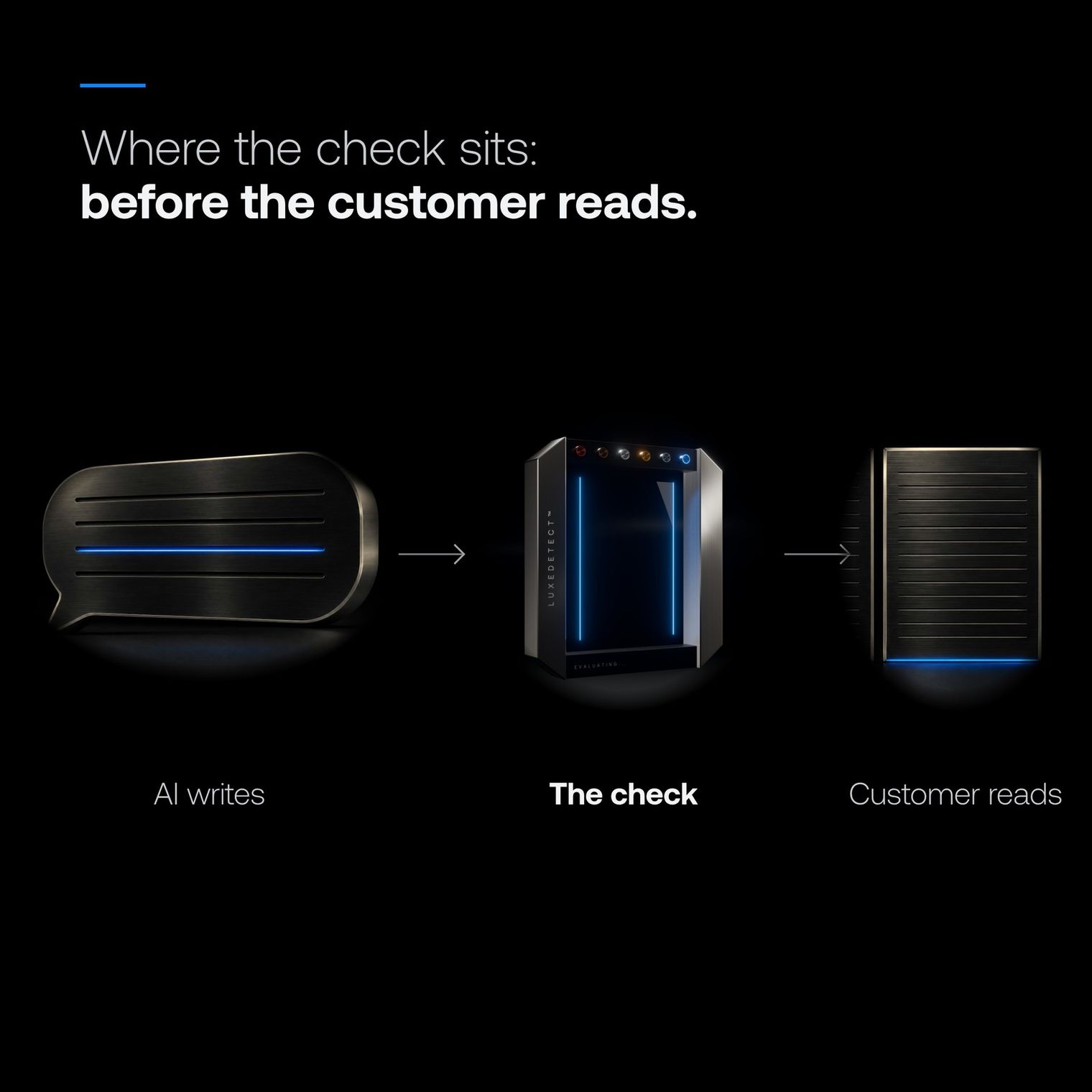
This is the job LuxeDetect™ is built for. We call the category AI Brand Integrity Infrastructure. In plain words, it is an independent check between the AI that writes and the customer who reads. The idea is a release gate, which is a checkpoint content passes before it goes out.
LuxeDetect™ never writes a word. It checks AI-written content against your own standard. We call that standard your LF1000 Brand Benchmark: your brand's rules, written down so they can be checked.
The result is a LuxeFactor™ Score, a number such as LF849, with the reasons behind it. Every result is tied to the version of your standard it was checked against. You can run the same check again against that version.
The first release of LuxeDetect™ is a dashboard that scores, explains and records. You paste in AI-written copy, choose the brand, and see the score and the reasons. A person on your team decides what happens next.
Five questions to ask about your brand compliance software
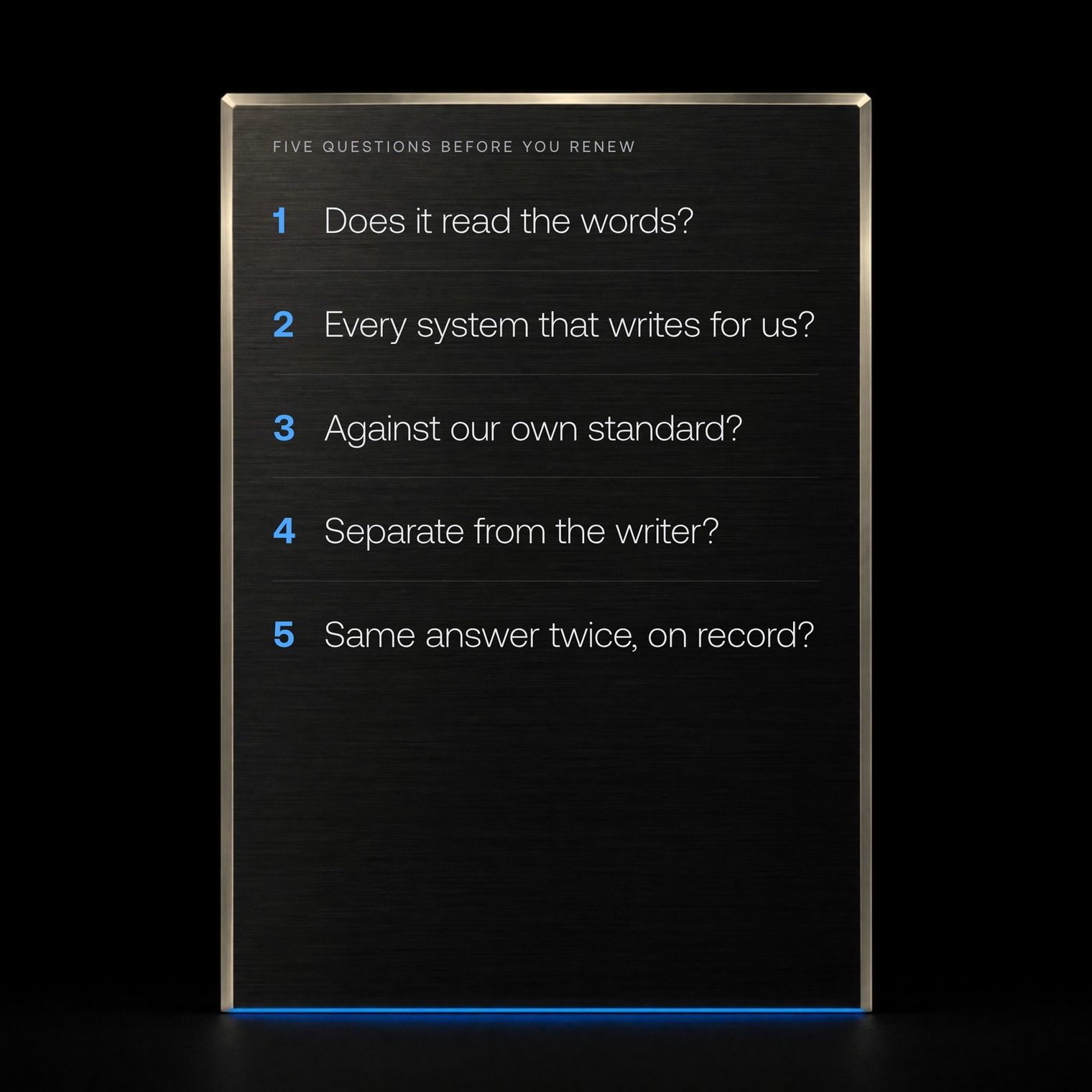
- Does it read the words, or only the design and the approvals?
- Does it read AI content from every system that writes for us, such as our chatbot?
- Does it check against our own standard, or a general idea of good writing?
- Is the checker separate from the AI that wrote the content?
- If we check the same piece twice, do we get the same answer and a record of why?
If the answer to the first question is "only the design," you have found your gap. The other four tell you how wide it is.
Questions people ask
What is brand compliance software?
It is software that helps a company keep what it puts out in line with its brand rules. Many products manage logos, colors, templates, assets and approvals in one place.
Does brand compliance software check AI-generated content?
Some products check copy, either while it is being made or after it is published. Ask whether yours reads AI content from every system that writes for you, such as your chatbot. Ask whether the checker is separate from the writer.
Is marketing compliance software the same thing?
The two overlap. Marketing compliance software leans toward legal rules, such as required disclaimers. Brand compliance software leans toward how the brand looks and sounds. Some products cover both.
The takeaway
Keep your brand compliance software. It does real work. Then add the one check it skips. Read the sentence AI wrote against your own standard, before your customer reads it.
Request early access to LuxeDetect™.

We are building AI Brand Integrity Infrastructure for luxury, and global enterprise brands. LuxeDetect™ evaluates every AI-generated output before it goes live. We measure alignment with brand tone, style, and standards, then enforce tiered actions at the release gate so off-brand content never reaches the public.
As AI spreads across CRM, CX, and marketing, manual review and generic safety filters cannot protect brand voice at scale. Our focus is to safeguard brand equity from AI generated content risks. We’ve been accepted into the Vector Institute Fastlane Build Phase. Stay tuned for launch updates.